
 Vee Hua 華婷婷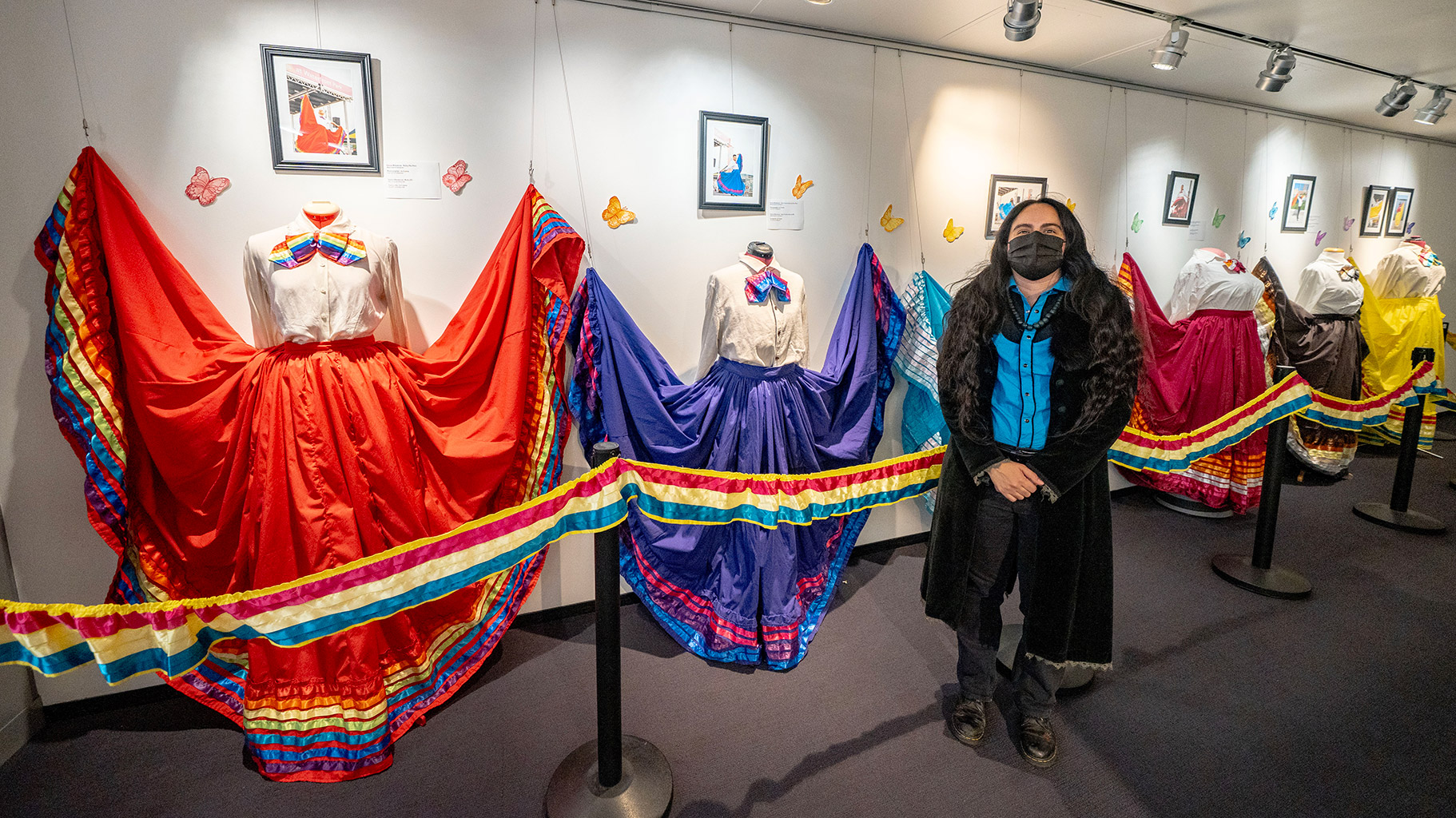
“It’s very warmly received, because I have a lot of people who are in my age range of their 30s in the diaspora who are very or are feeling very lost – who feel like they had to choose being queer over their culture,” they say, of the work that they do with Latine communities.
Vaquero Azul goes on to describe the loss and grief they felt when they first came out in their early 20s. At the time, only their mother supported them, and the rest of the family cast them out.
“I thought, ‘Okay, well, I don’t belong in my culture,’ they recount, “but then coming back to it, it’s like, ‘Wait, no, this is who I am. This is my identity.'”
Making Space & Taking Space for Latine Communities
Part of the reason that Vaquero Azul creates spaces for and makes art focused on Trans and Two-Spirit individuals from similar ethnic and cultural backgrounds is because they understand the sorrow of having to choose between parts of one’s identity and the joy of finding one’s unique way back to embracing their full selves. The sorrow is felt all the more when one is in a state like Washington – or in cities like Seattle and Tacoma, where they primarily work – because many spaces are predominantly white, and individuals from diverse cultural backgrounds may not always find an outlet that is sympathetic.
“That grief really messes with you for a while, and you feel really lost. With my art, getting to wear it with pride, getting to remember my culture and my history… it’s always been on my mind,” they explain, as they note that such a focus has become much stronger in recent years.
“I wanted to explore it more heavily in my art [recently], and I wanted to make sure to be intentional with the symbols and details that I had, so that I could get to explain it, so that I could get to know more the words of [the] Nahuatl [language]…” they explain, of reconnecting to one’s cultural and Indigenous identity. “I [even] have elders who are still learning things all the time.”
By being open and transparent about their journey, Vaquero Azul has found more and more that they are not alone. As they explain, “With that came a lot of community saying that they didn’t know they could feel this way. They didn’t know they could express themselves this way.”
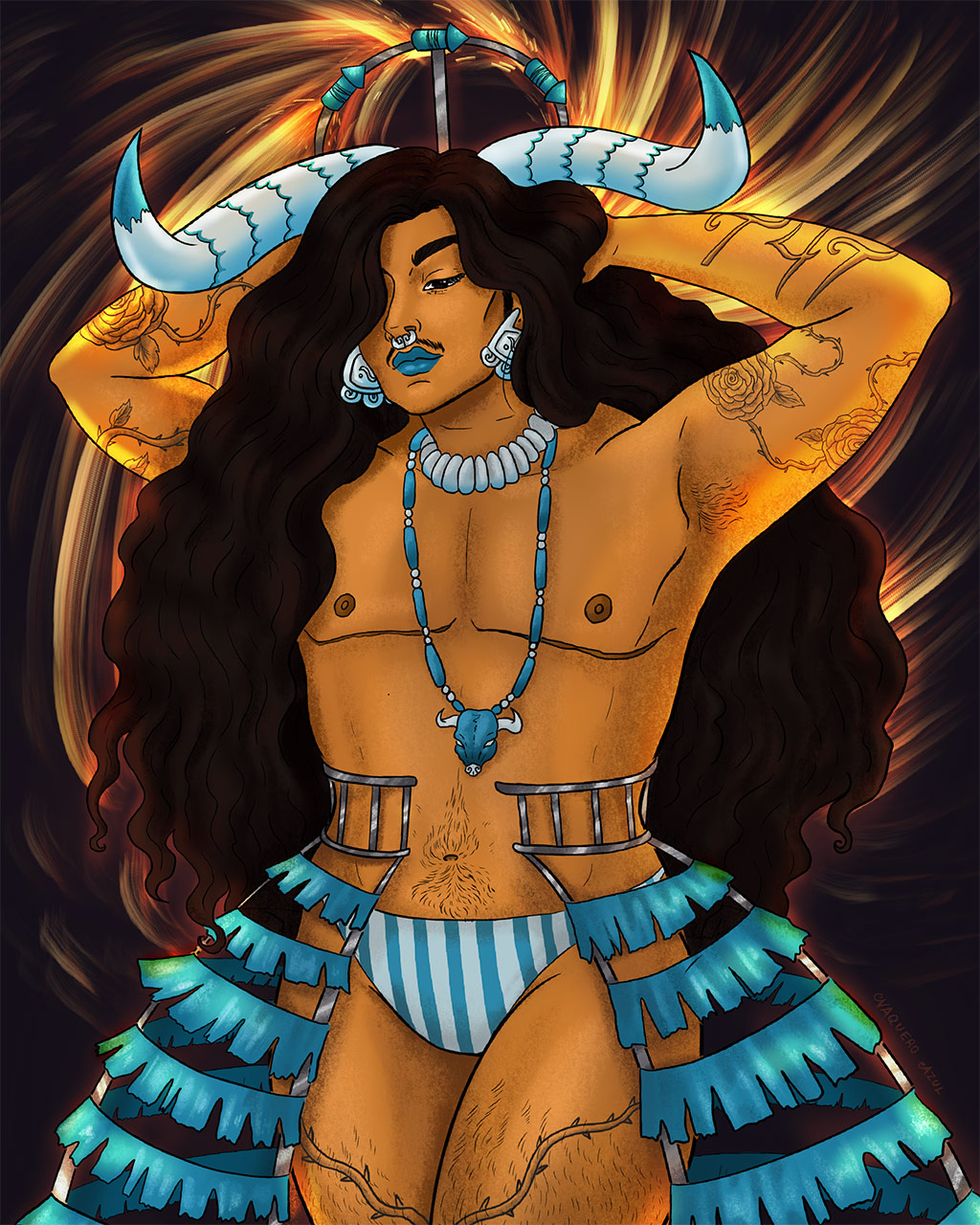
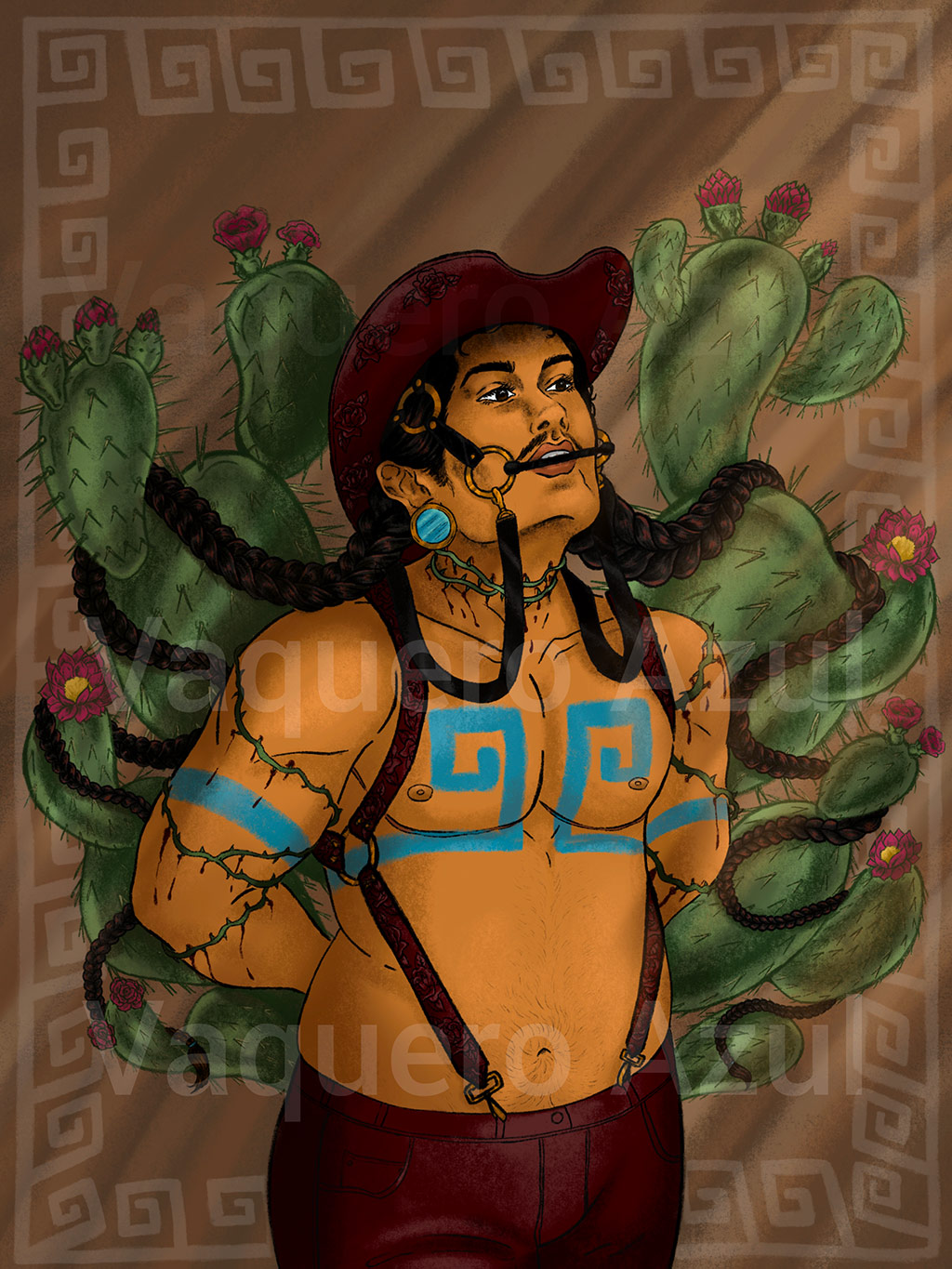
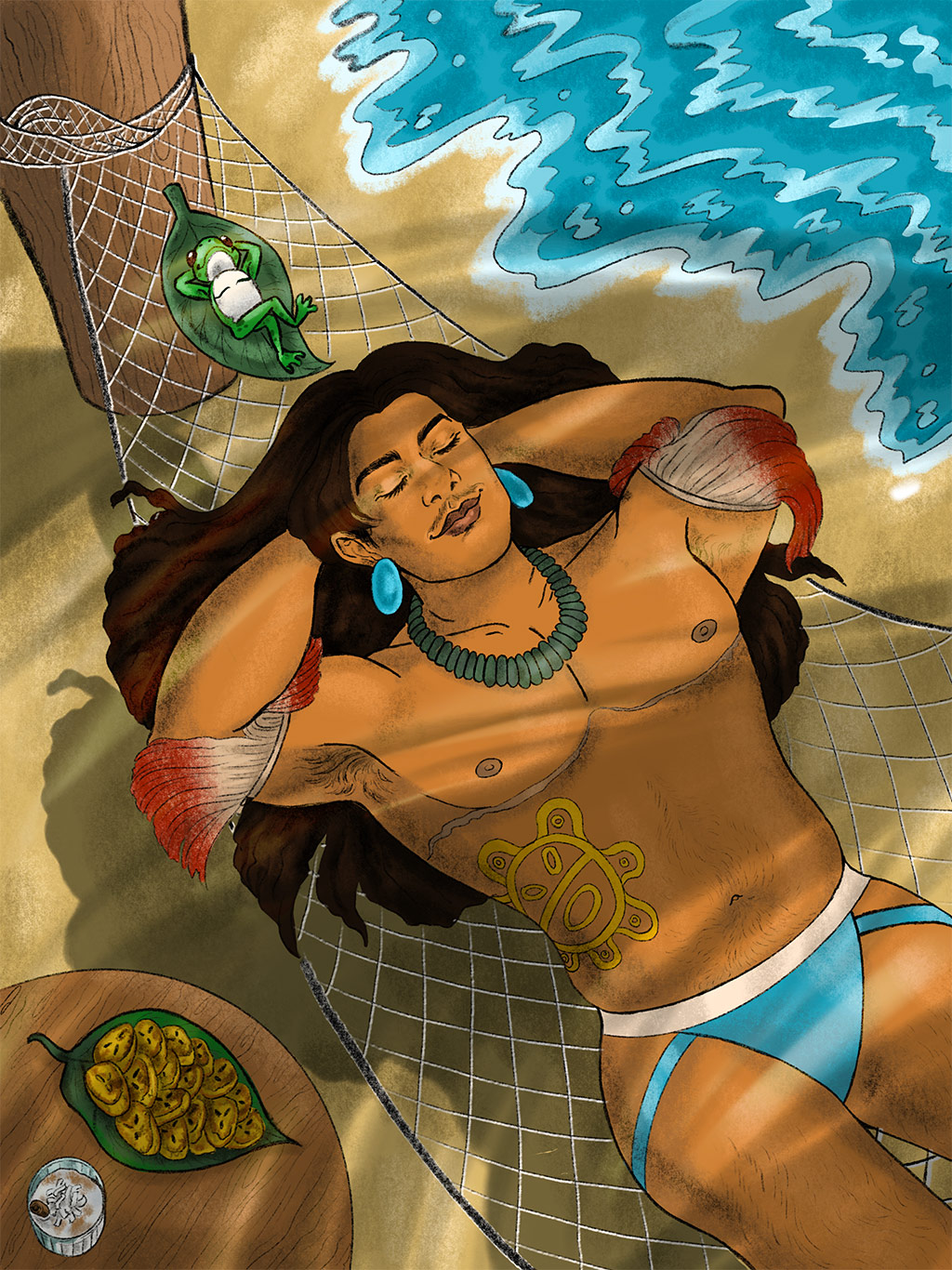
The vibrant illustrations Vaquero Azul makes can show a diverse array of Latine trans and Two-Spirit bodies, whether they be of couples kissing in luchador masks or a post-op trans masc individual lounging topless. Vaquero Azul has found – through their own art and also that of other trans masc artists and Two-Spirit artists – that specificity around the visual body’s representation can be wonderful.
“I feel like, when I see a lot of white trans bodies… [they’re] very vague or abstract, or can be focused on a part versus like the whole body, or [they have] no cultural significance,” Vaquero Azul notes. “That tends to make us not connect. That’s why it feels really great to get to be specific, and I want to keep being more specific.”
Other joyous shared excitements come from meeting and collaborating with similar artists from other countries, such as Mexico.
“Even if we have some barriers of terminology or different lingo, we’re still excited…” they explain. “No matter where we are, we just want to be seen and validated, and we just want to be there for each other, because we know how hard it is.”
Normalizing the trans and Two-Spirit experience can be found in depictions of art, but also in cultural experiences such as cultural events.
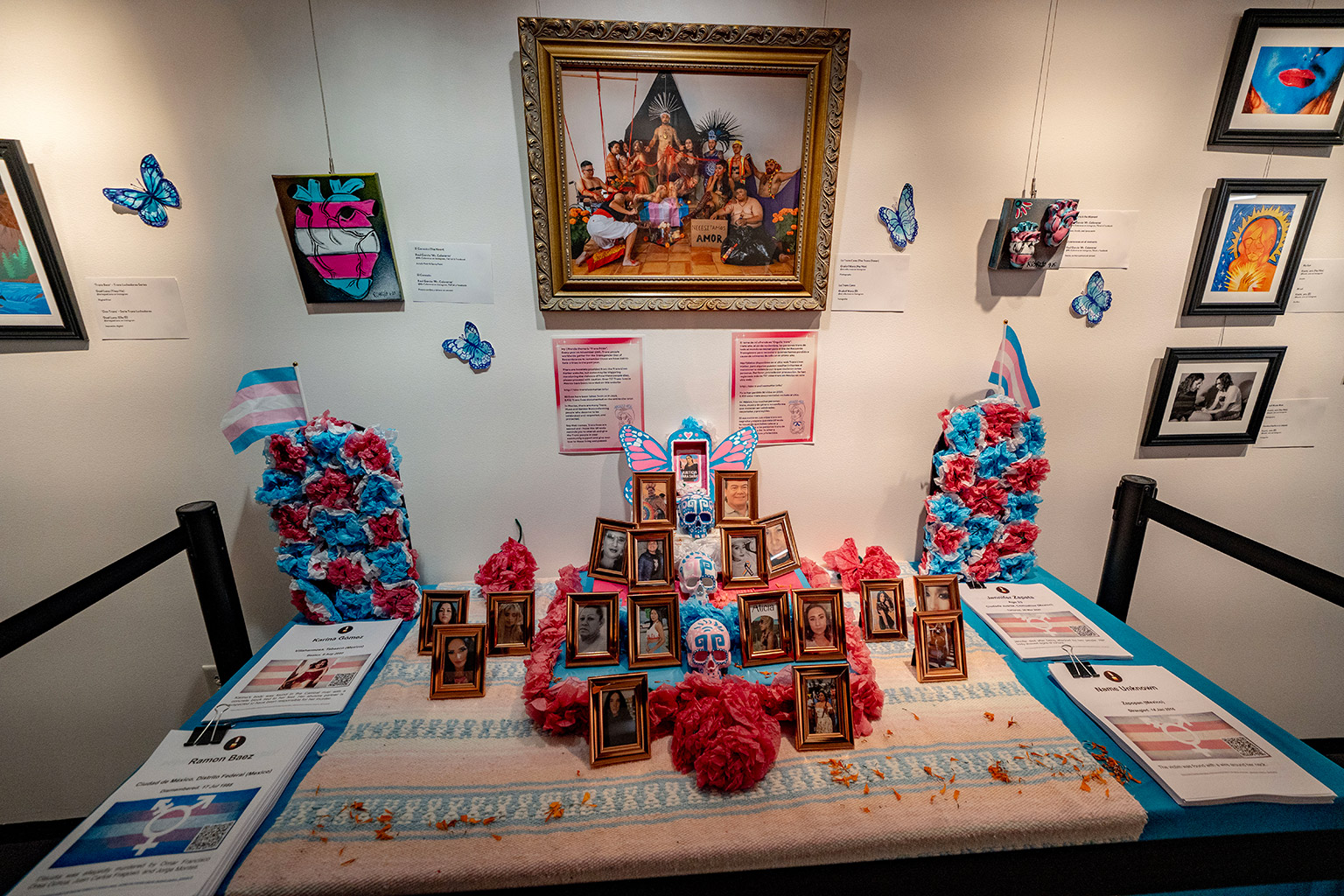
“During Dia de Los Muertos (Day of the Dead) for the past like, four or five years, I noted never running into an LGBTQ-themed ofrenda or Trans Pride ofrenda,” Vaquero Azul notsd, of the rich altar displays that are usually associated with the celebrations to ancestors and loved ones that have passed on.
“That frustration then came into the work of… we need that intentionality,” they continue, regarding setting up such an ofrenda during Trans Pride. “Doing that, I’ve already started to see other people local to Washington create their own Trans Pride ofrendas too… One day, I just want to see it in abundance.”
Body Work, Healing, and Art as Medicine
In October 2025, Vaquero Azul had the transformative experience of participating in an artist residency at the Seattle Public Library. The experience allowed them to curate a bilingual English-Spanish group art exhibition entitled Nuestra Euforia / Our Euphoria, which also included a Trans Pride ofrenda and work by local trans and gender non-conforming artists.
“This show is a love letter to our transcestors and queer ancestors who have been here since time immemorial,” wrote Vaquero Azul in the introduction to the exhibit. “Our collective euphoria is a sacred offering to every single one of us, in the past and in the now.”
“[The residency] actually gave me the courage to leave my nonprofit job at the time and get to do art full-time…” they recall. “I was experiencing intense burnout, and I got a lot of negative feedback in my workplace of, ‘You’re being selfish… you’re so focused on your art.'”
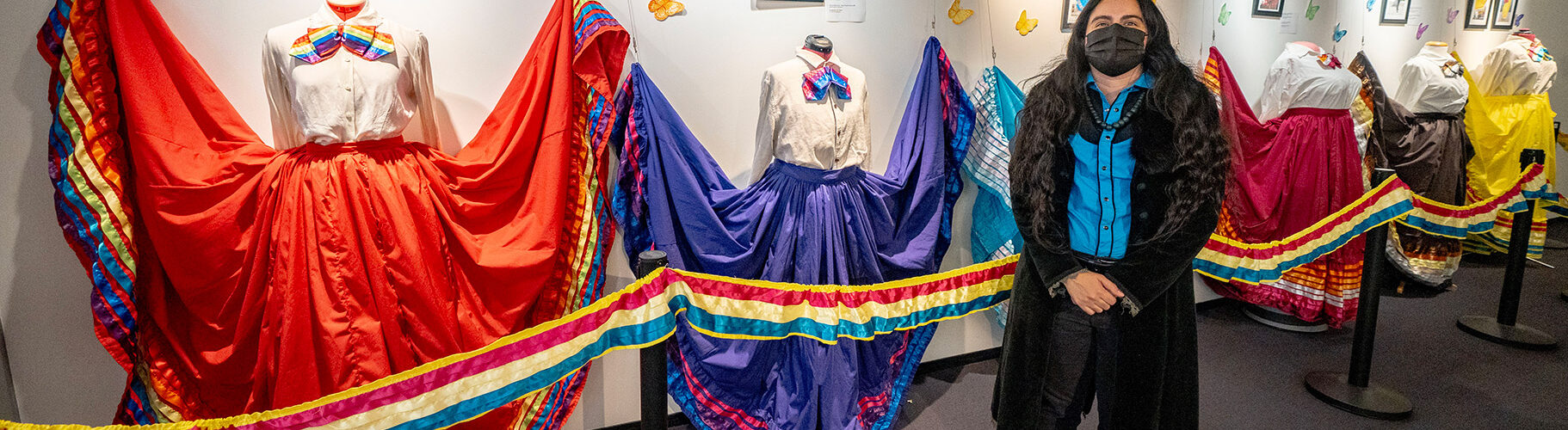
The residency helped Vaquero Azul make their dreams of being a fashion designer a reality. And rather than being focused on wasteful fashion for the masses, they designed and sewed outfits for Danza Monarcas, the LGBTQIA+ Latine dance collective of which they have been a part of for years. As they slowly phased out of being a dancer and more of a costume designer, they were able to brainstorm a series of folkloric dresses based on a wide spectrum of Pride flags under the LGBTQIA+ umbrella.
“Getting to do that process made me realize I can really do things for groups,” Vaquero Azul admits. “[I appreciate] just sewing for myself, but getting to do it for other people was really satisfying.”
They hope to continue receiving funding for Danza Monarca’s wardrobes to someday be “larger than life,” and they would love to focus more on fashion shows that center only trans bodies. Citing many friends that they “would like to have model for the first time,” Vaquero Azul notes that community members should be encouraged to step into such spaces or to let go of idea that one has to be “pro” to participate.
“[Members of our trans community] deserve to get to hold certain titles,” they say. “They’re used to being like, ‘Oh, I’m not an artist,’ and I’m like, ‘But you you are. Your body work is art. The body work you do is medicine. The healing you do for community is medicine. The photography you take of community is medicine.'”
Creating Representations One Wishes to See
Vaquero Azul’s current focus on textile and costume as a large part of their artistic practice can be traced back to direct influence from their abuelita, or grandmother, who first taught them how to make little pillows and blankets.
“As a kid, she taught me our cultural embroidery, and it was so adorable, and I still have some of the pieces of it,” Vaquero azul shares. “Over time, she taught me how to make blouses and skirts, and that was when I was really little.”
It wasn’t until after high school that they returned to sewing, using the opportunity to focus on cosplay and Comic Cons. While satisfying at first, dressing up as other people’s characters lost its appeal and left them yearning to embrace their own experience.
They recall, “I kept wanting representation in media, [given] that frustration of the Book of Life being like, ‘Oh, it’s for white people, not for Mexicans.'”
“American media I was seeing of us was still not really for us,” they continue. “And same with it not being queer. I got really tired of that, and that’s when I was just like, ‘Alright how do I get to start making the representation I wish to be in the world?”
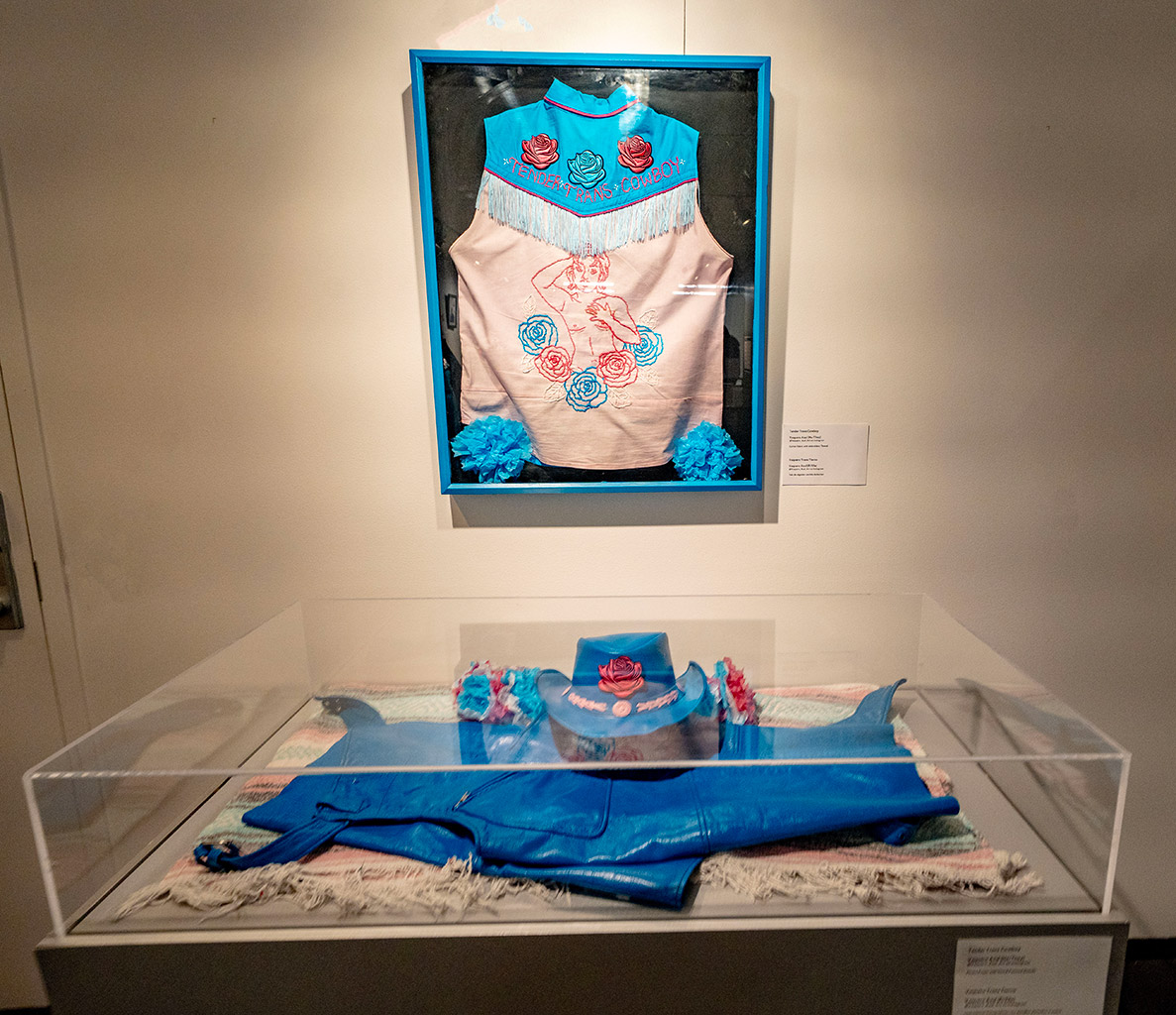
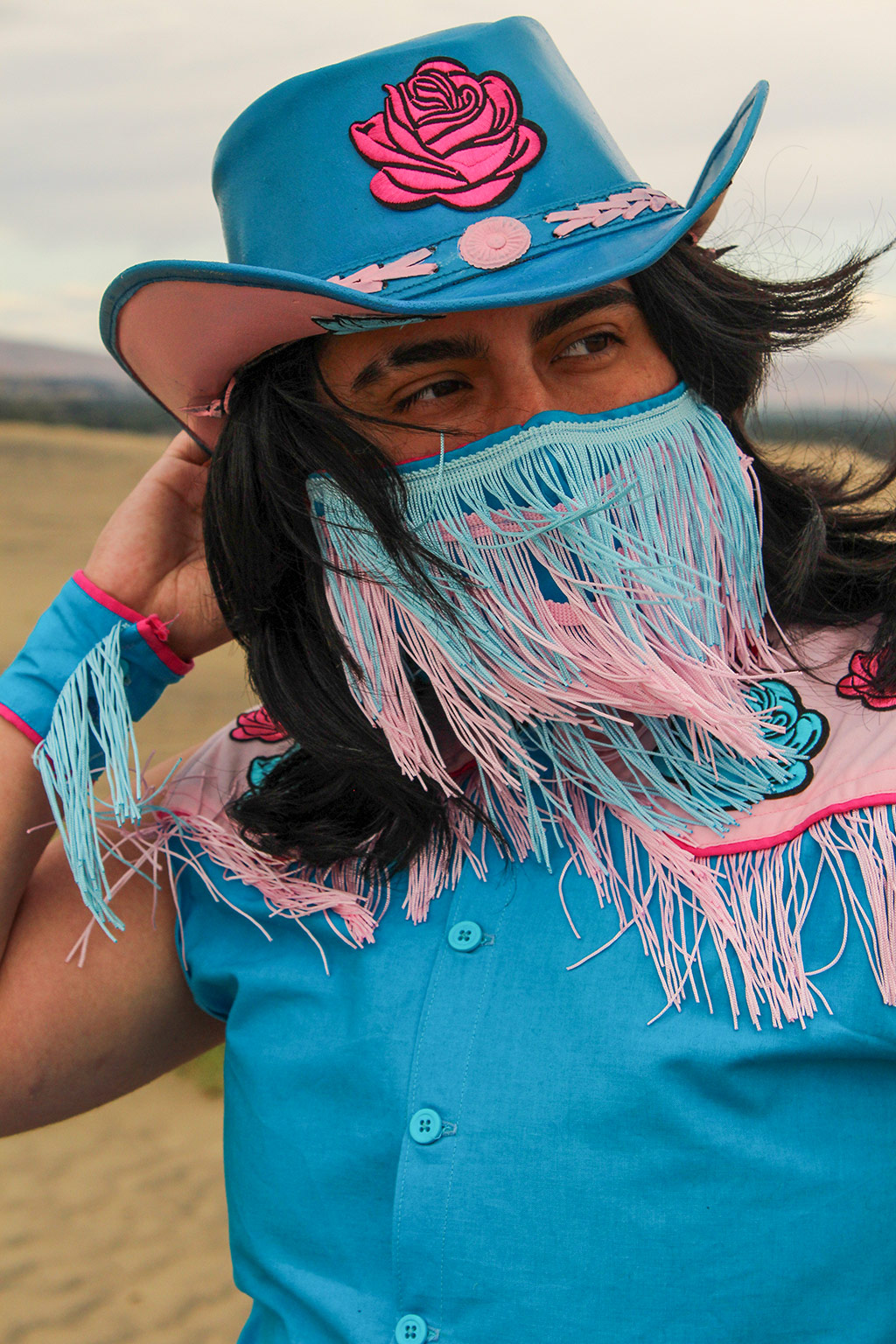
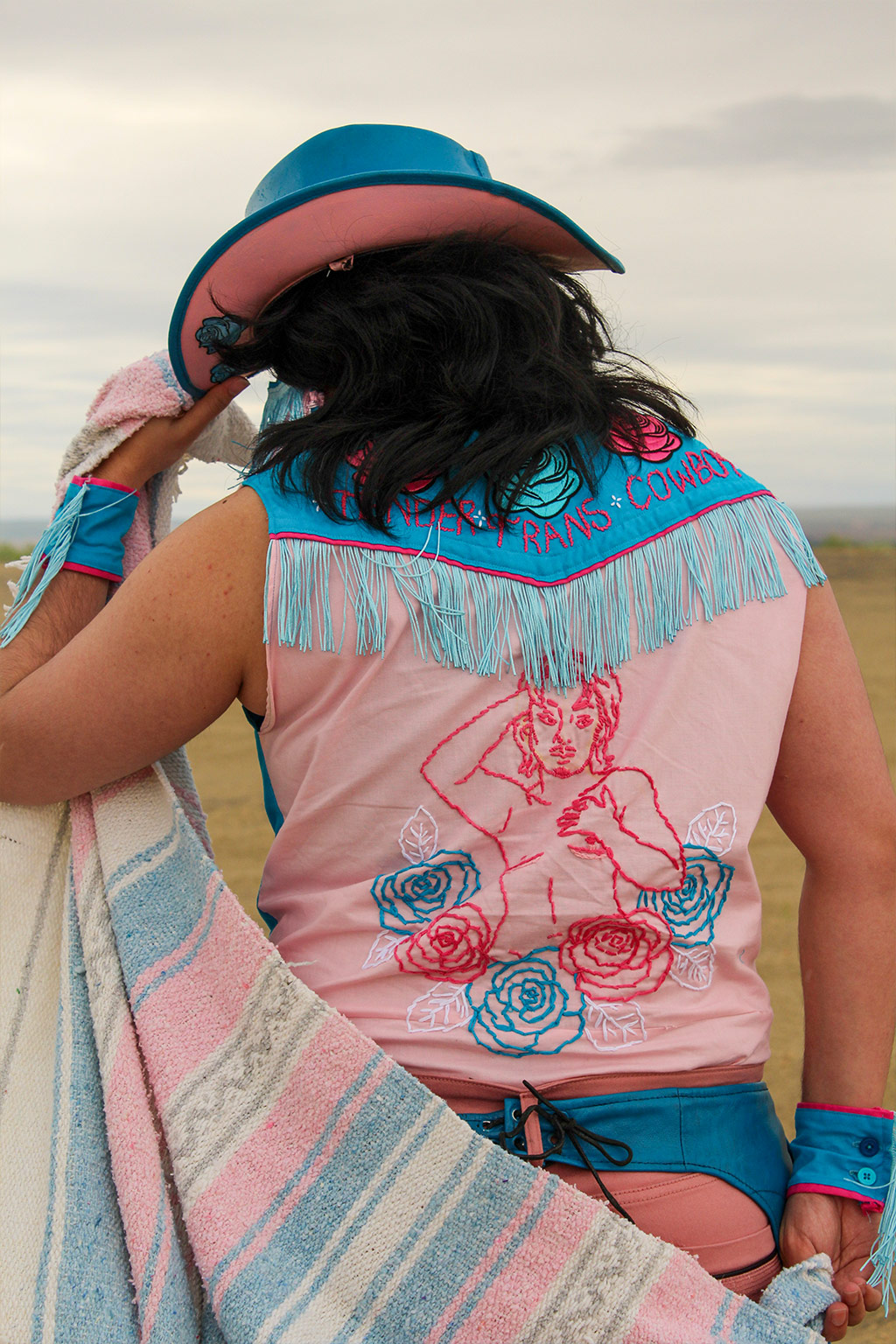
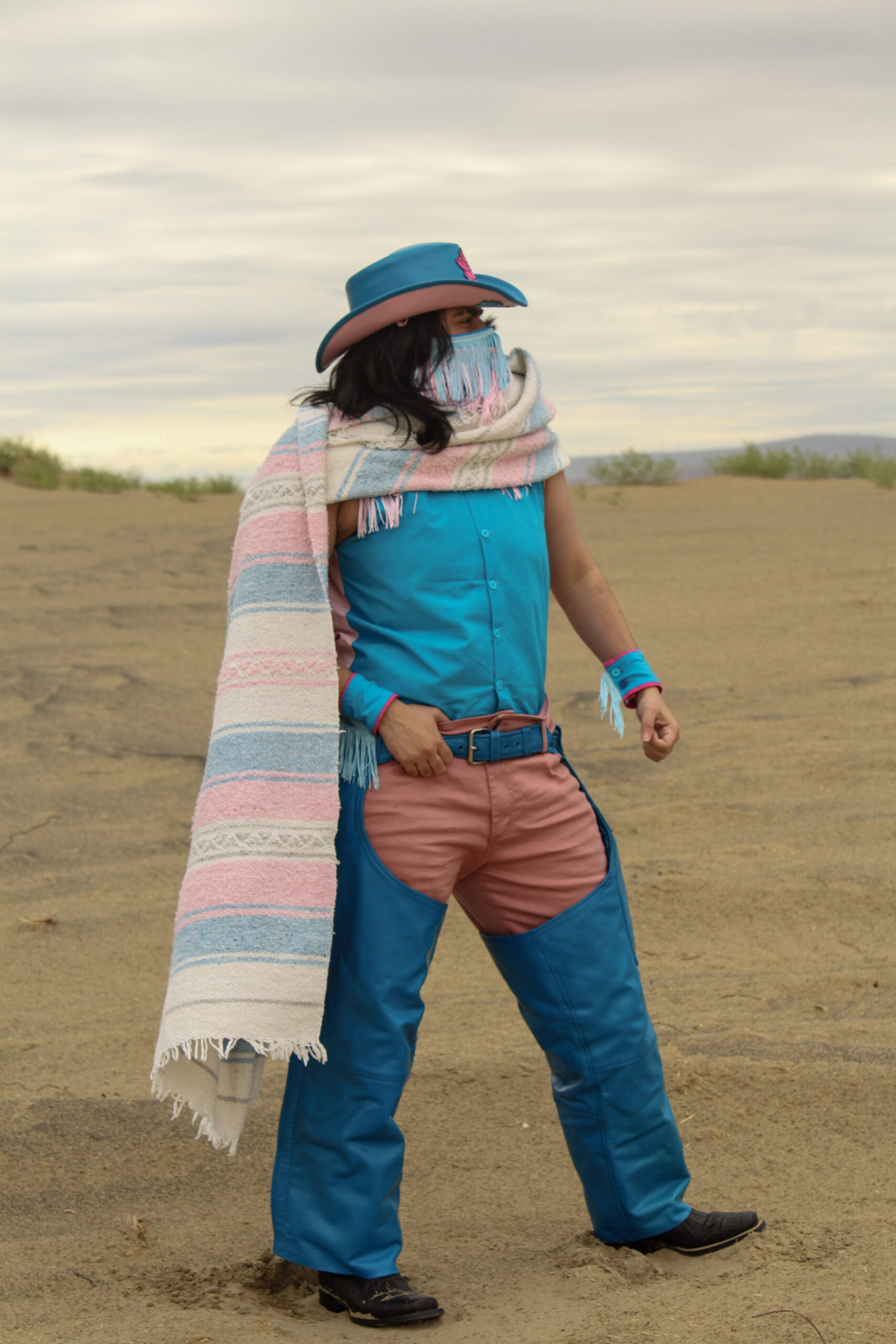
With that came the invention of their gender trans cowboy outfit – a blue-and-pink-colored work of art, complete with fringe and embroidery. It received an array of responses both positive and negative.
“Many people [expressed] in English and Spanish… ‘This is so beautiful. I want this so bad. This makes me so happy,” they recall, of the experience of posting the outfit on Twitter before it became X. “And then getting death threats from a lot of white men telling me that, ‘Oh, if these people were alive, they’d shoot you and kill you in the head. These old western cowboys would find you disgusting.”
The negative comments, if anything, just contributed to Vaquero Azul’s conviction that the representation of trans Latine individuals should be much more common and much more respected in the wider world.
“I’m so tired of the fucking hate that we have to deal with,” they say.
Multi-faceted Expansion of the Craft
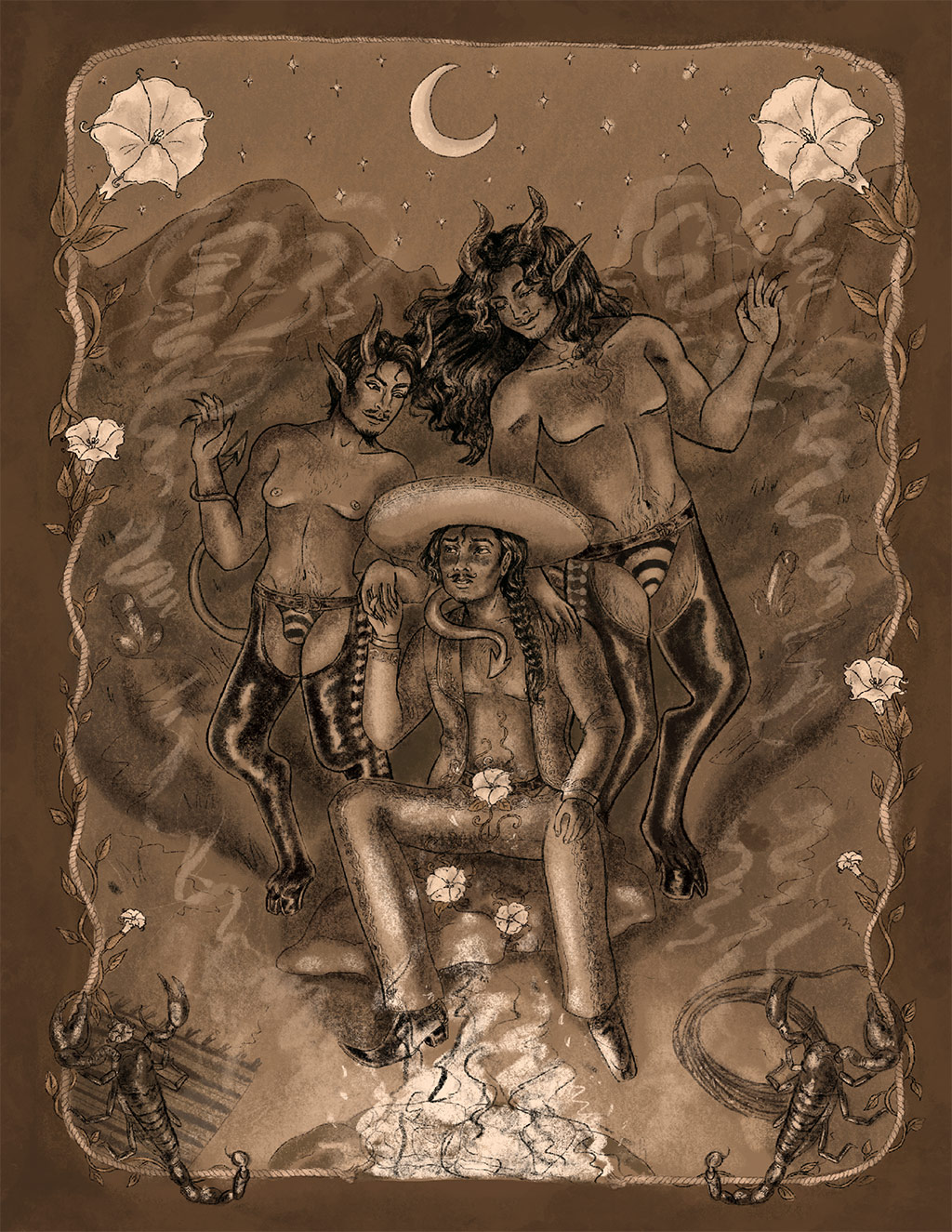
Perhaps, such sentiments – certainly shared by many within similar communities – are why Vaquero Azul’s illustrations are such a positive portrayal of authentic representation. In addition to working with textiles, they are a talented illustrator, well-versed in mixed media techniques, with a focus on both digital and watercolors.
More recently, Vaquero Azul have expanded beyond their comfort zone and used a grant from a Tacoma Artists Initiative Program to try and build large-scale nicho sculptures. In Mexico and parts of Central and South America, <,em>nichos are decorative folk art boxes that can sometimes be devotional and sometimes just playful. The spin Vaquero Azul hopes to put on nichos is to make them giant temple-like versions dedicated to different individuals within the LGBTQIA+ community.
“They’re going to be fucking massive – a big, giant wooden cabinet size – and [I will] get to open them up to be like temples, so that they can be a lesbian, gay, bisexual and trans [inside],” they explain. “[Each] can be a temple for everybody to honor themselves and it can get to show people’s faces in it, like a mini ofrenda to scale inside of it.”
Whether working in textiles, illustration, sculpture, or community organizing, Vaquero Azul has a clear throughline in all of their work: authentic, culturally-specific representation that helps members of their community feel seen and heard.
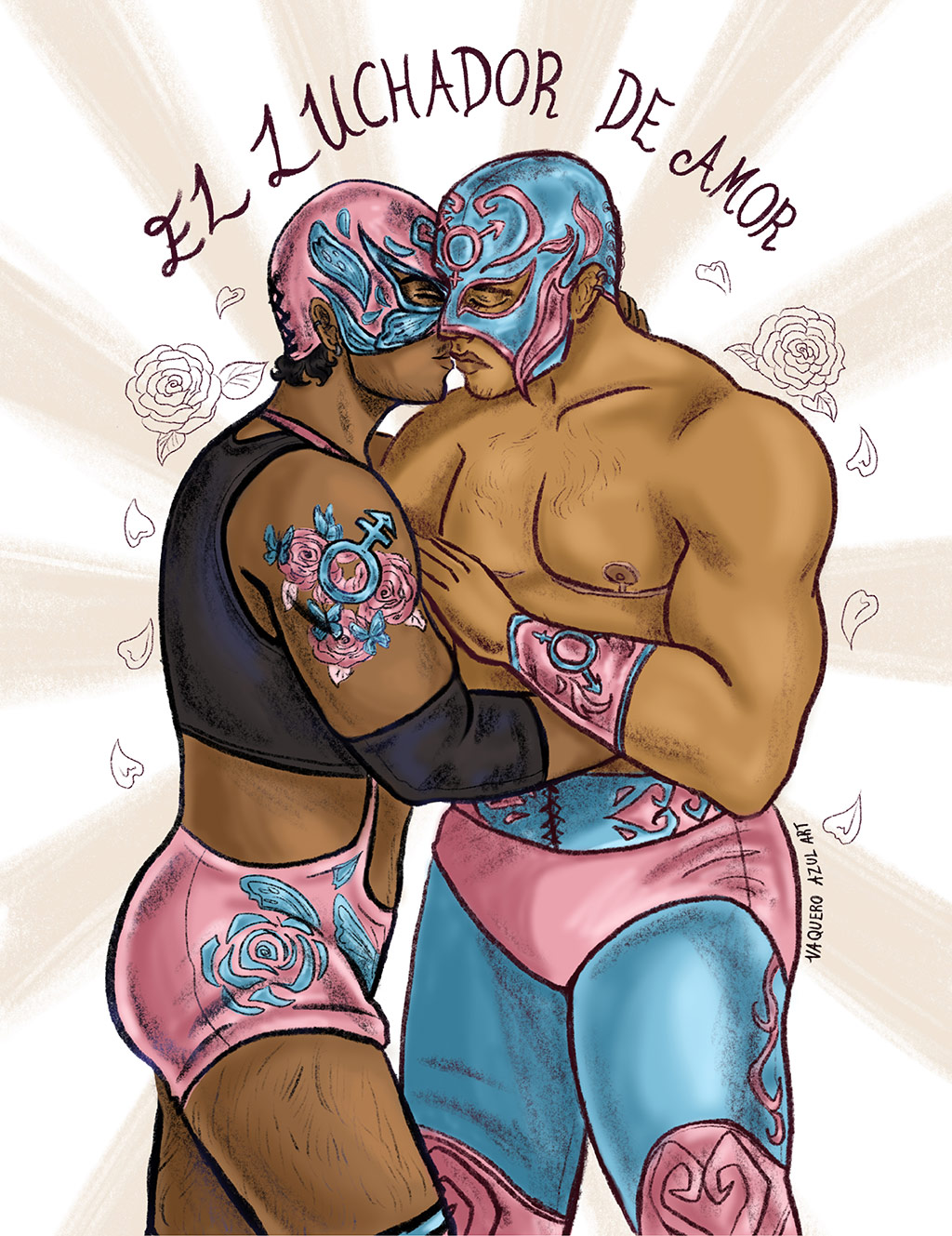
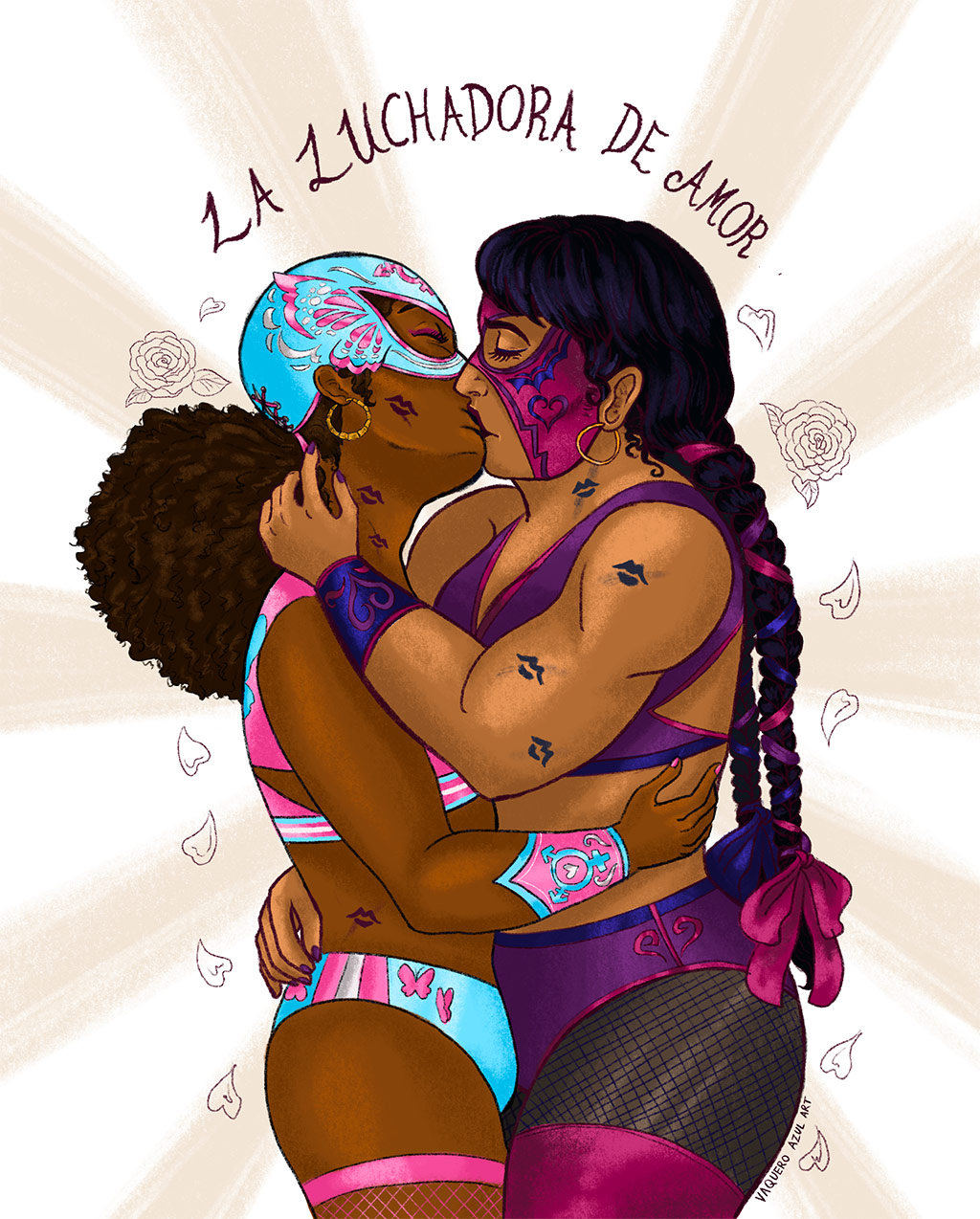
One of their most popular pieces is called El Luchador de Amor, which features two trans Mexican wrestlers kissing. A companion piece has recently been created entitled La Luchadora de Amor.
As they describe it, the piece “came from my frustration with young adult books hiring white and European illustrators [to pair] with a trans Mexican author and [those illustrators] being the representation.”
“The care is not there, and that intentionality is not there…” they continue. “A lot of that frustration came from, ‘Alright, how would I present it? How would I get to do it?’ And that’s what a lot of my art goes back to.”
Ω

 Saelyx Finna